The Glorious Era of NIH
AI does not make reinventing libraries wise. It makes narrow, project-shaped tools cheap enough to build.
Every engineer has suffered from NIH at some point.
Not invented here is one of those engineering traps where rewriting the library feels prudent right up until you inherit the maintenance cost. You look at a library, see three things you dislike, ignore the nine hundred things it quietly handles, and decide the project would be cleaner if you wrote your own version over the weekend. The weekend becomes a month. The month becomes a maintenance burden. Somewhere in there, the original problem is still waiting.
So no, this is not a celebration of rewriting every library because the existing one could be 4% faster. That version of NIH still leads to disasters.
The interesting version is smaller.
The Old NIH Tax
Classic NIH had a brutal exchange rate. You paid with time, bugs, edge cases, documentation, tests, and the slow discovery that mature tools are mature because they have already been punched by reality for years.
That is why the default answer should still be boring. Use the database. Use the parser. Use the physics engine. Use the asset pipeline if it fits. Most mainstream tools are not popular because everyone lacked imagination. They are popular because they compressed a huge amount of pain into something installable.
But there is another category of tool where the mainstream version is not really solving your problem. It is solving every possible problem adjacent to yours. That is useful when you need the whole universe. It is awkward when you need a drawer.
AI Changes The Shape
AI makes small, focused software cheaper to attempt.
That does not mean it makes software free. It means the first useful version of a narrow tool can appear before the idea goes stale. The cost of scaffolding, wiring UI, generating boilerplate, and exploring awkward APIs has dropped enough that a custom tool can be a practical choice instead of a personality flaw.
For Candlemark, that matters more than it would for a general-purpose engine. I do not need a universal modeler. I need a modeler that understands the weird little shapes this game uses. I do not need a full cinematic suite. I need a director that can arrange stealth scenes, patrols, props, light, and timing in the vocabulary of this project. I do not need an editor that can make every genre. I need one that knows what a room, a surface, a guard, and a route mean here.
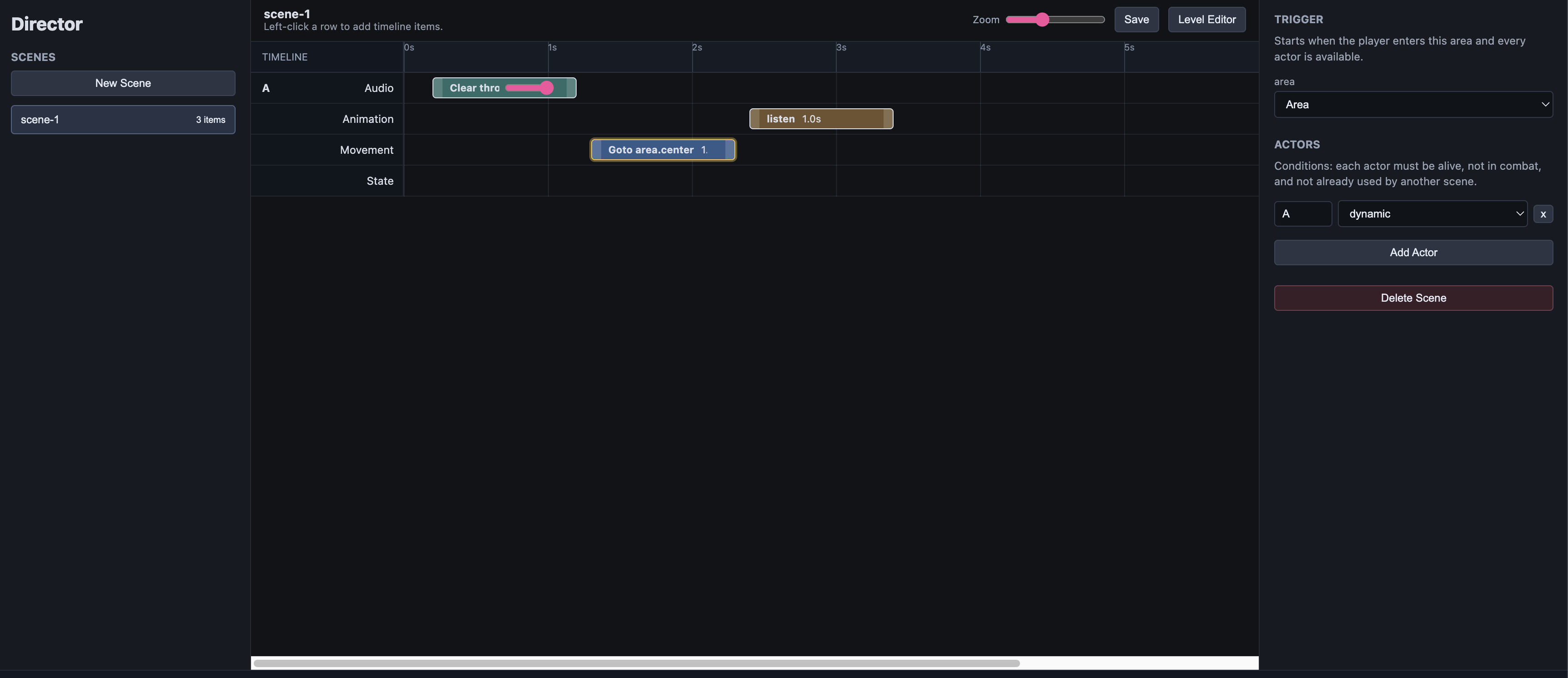
A screenshot of the director
That is a very different bet from reinventing Blender, Unity, or Unreal. The goal is not to compete with them. The goal is to build tools that are so specific they would be bad products and good instruments.
Specific Tools Have Taste
A mainstream tool has to preserve possibility. It needs escape hatches, plugin systems, broad workflows, and a thousand ways to avoid blocking a user it has never met.
A project tool can be rude. It can say no. It can hide concepts that are not useful. It can make the correct path short and the incorrect path absent. It can encode taste directly into the interface.
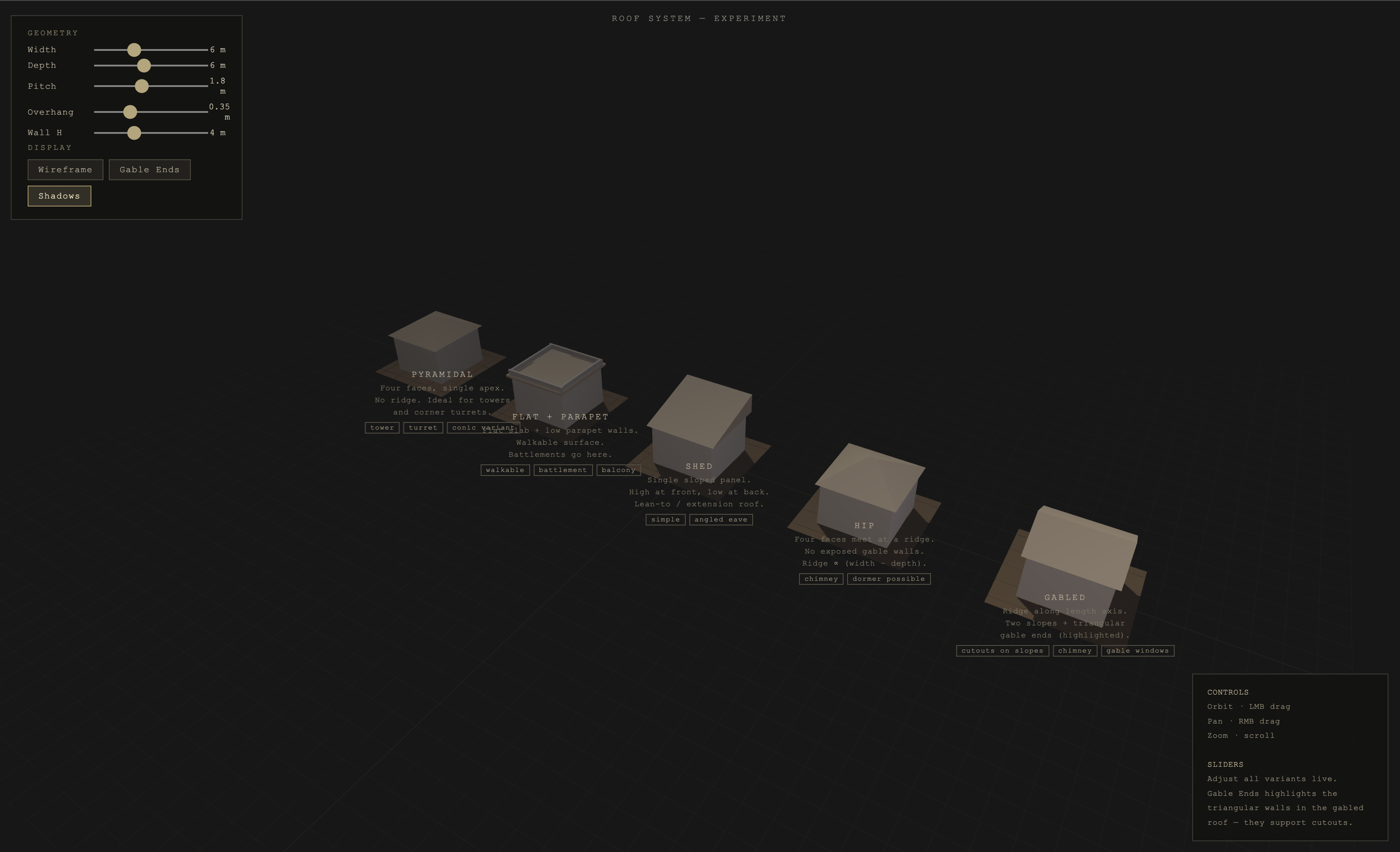
a tool built to experiment with roofs shapes
That is the part I care about. A focused modeler can refuse geometry Candlemark will never render well. A focused editor can make patrol routes and surface materials first-class instead of metadata smeared across unrelated panels. A focused director can treat “the player sees this candlelit doorway from this angle” as a real authoring unit, not a pile of transforms and notes.
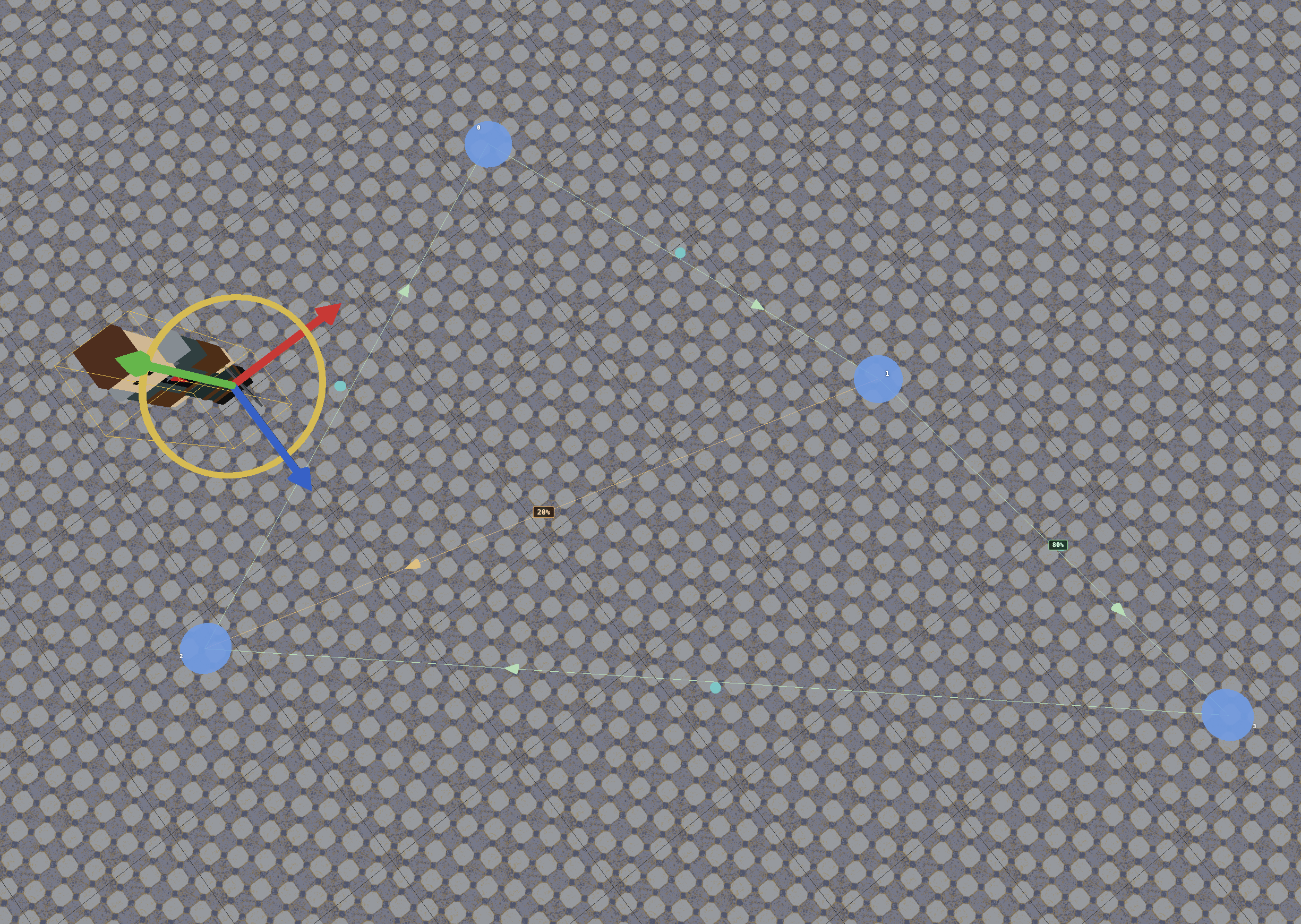
a screenshot of the editor exhibiting the built-in waypoints based patrol system with weights on branches
These tools are not smaller because they are less ambitious. They are smaller because they know what they are for.
The New Rule
NIH used to mean “I can do better than the library.”
That is usually a trap.
The better question now is: “Can I build a smaller thing that fits this project better than a general tool can?”
If the answer is no, install the library and move on. If the answer is yes, AI makes the experiment cheap enough to try, and sometimes cheap enough to keep.
That feels like a glorious era to me. Not because everything should be rebuilt, but because some things should finally be built at the exact size of the problem.